The First AI Managed Message from My Bot Tim, Just Booked a Call
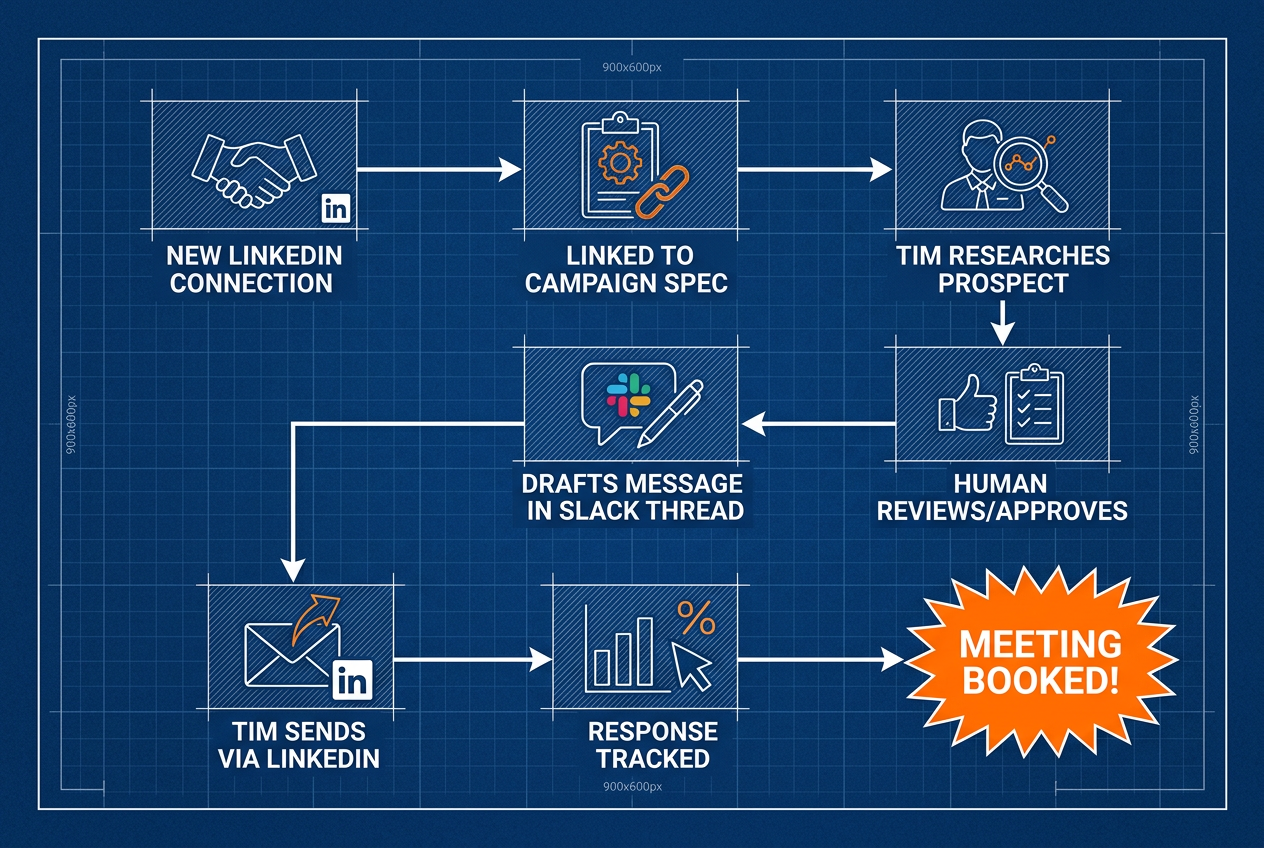
My first AI-crafted LinkedIn message just booked a meeting. The bot researched the prospect, drafted the message in Slack, I approved it, and Tim sent it. The multi-agent future isn’t coming. It’s here.

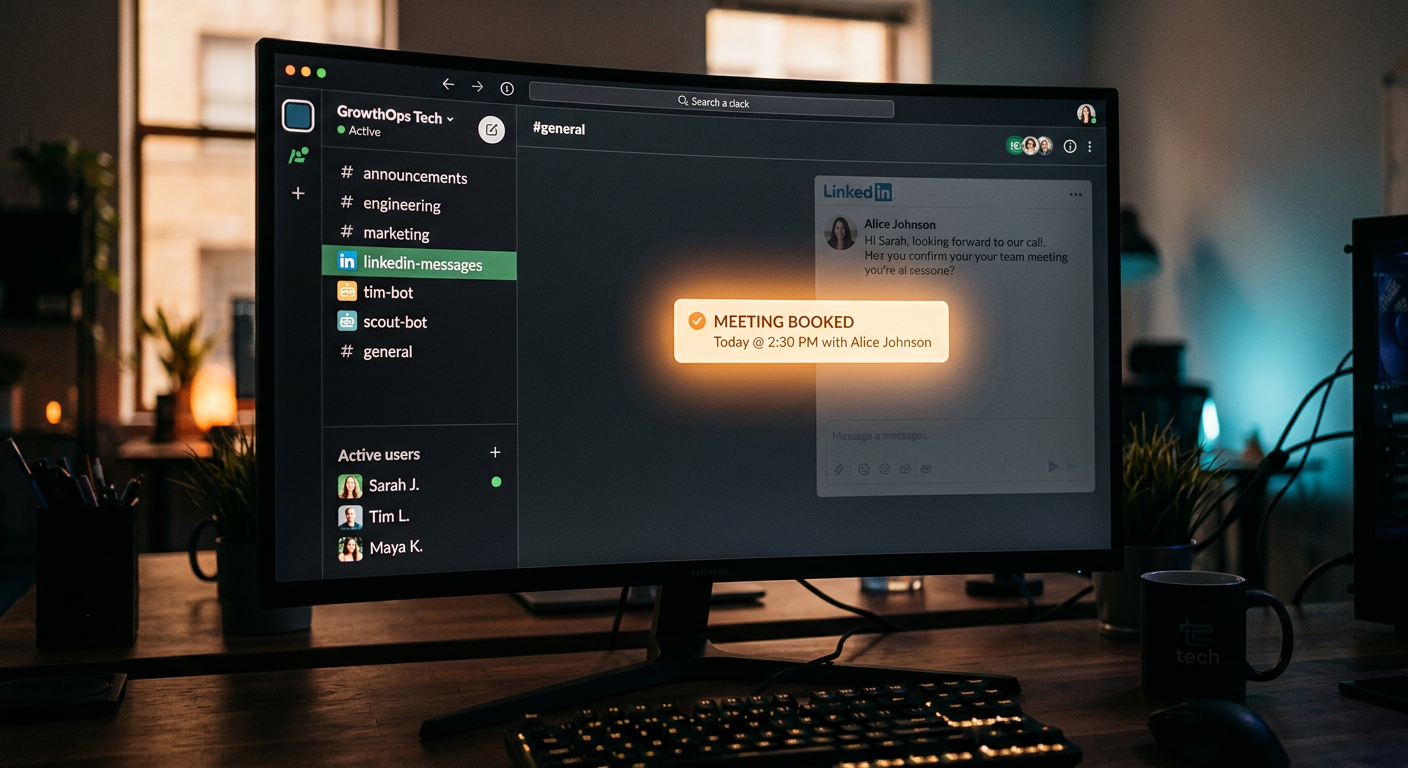
My first legit AI-enhanced bot message literally already booked a meeting.
Let me say that again, because I’m still processing it.
I woke up this morning—running on maybe three hours of sleep, a week and a half deep into a vibe coding firehose that has wrecked my sleep schedule and apparently my need to shave—and my AI robot Tim had already helped me craft and send a personalized LinkedIn message that resulted in a booked call.
Day one. First message out the door.
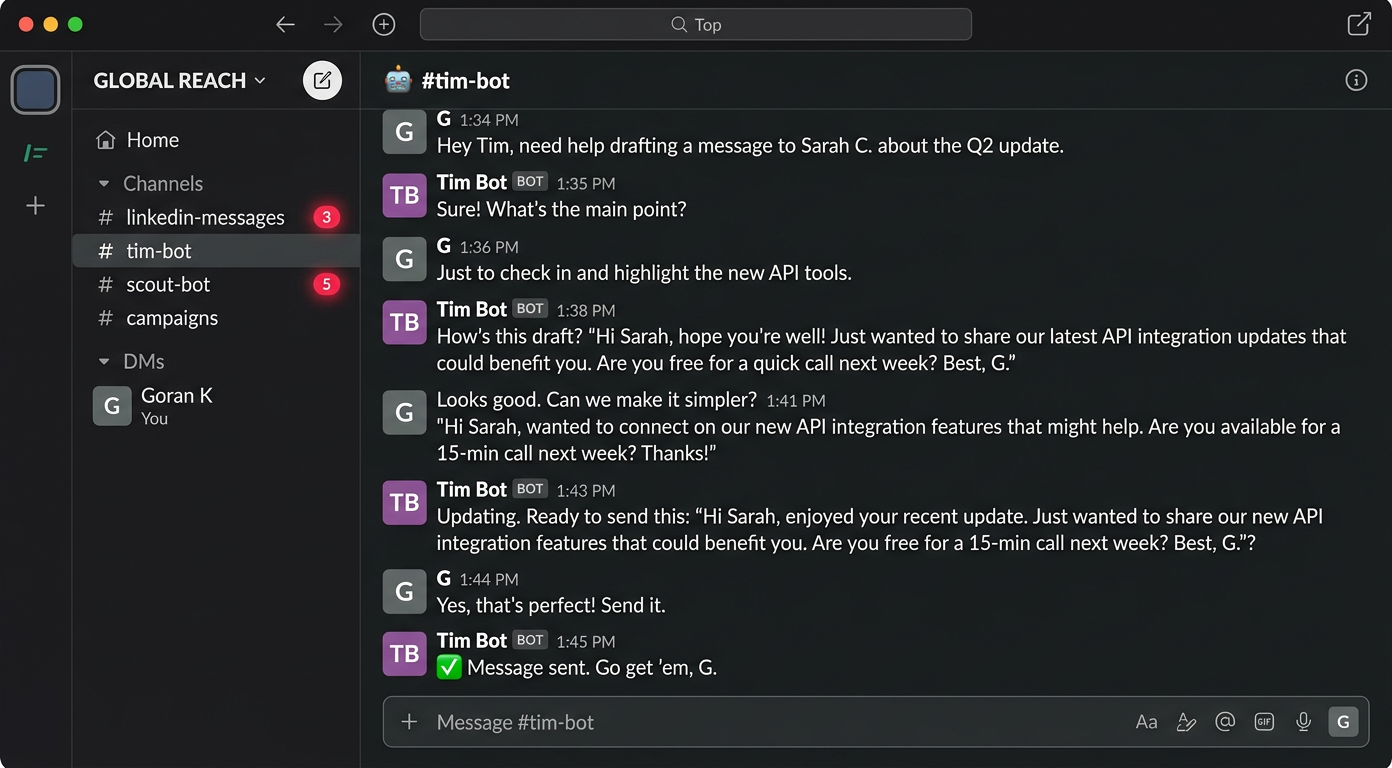
And I’m not talking about some canned template that got blasted to a list. This is me working with an AI bot inside my Slack workspace. The bot had knowledge about the person. It understood the campaign. It constructed the message. We worked on it together—back and forth in a Slack thread—and then Tim sent it through LinkedIn. If you think that’s easy, you are crazy.
But if you think it’s impossible, you’re wrong.
Because I just did it, and the meeting is on the calendar.
Why I Blew Everything Up and Moved to Slack
Okay, so here’s what happened. Last week, I was running Tim through Telegram, and it was working. But I kept running into this wall where I was like—why am I reinventing the wheel? I had tried building a custom web interface. It was horrible. Telegram was fine for one bot, but the second I started thinking about multiple agents, I needed something that could actually handle team dynamics. Channels. Threads. Context. The stuff that happens when you have more than one entity doing work.
So I sat down and had AI analyze my options. It came down to Slack or Discord. Honestly, either one works. But I went with Slack because if I’m building a team—even if that team is made of robots—Slack is where team management happens. It’s got a gazillion features, the threading model is perfect for maintaining context per conversation, and once you understand how AI operates inside of Slack message threads, you unlock this whole different level of agent interaction.
Did it break everything? Yes. Absolutely yes. I lost agent memories. Claude went off on tangents and rebuilt things I didn’t ask for. I had to go back to the drawing board, fix memory systems, add heartbeats, debug threading issues. There is just so much that goes wrong when you start getting into AI operating inside Slack—like, what’s the context? What does the agent know? What thread is it in? It’s insane stuff. But with my trusted buddy Claude Code, I tackled it. And I got there.
There’s a whole different level of thinking and engagement that goes on when you have an agent. If you have one and you understand how they work and how you work with them, it’s so different.
Campaign-Driven Outreach: The Spec That Powers the Message
Here’s the part that I think is the real breakthrough. The message that booked the meeting wasn’t just Tim riffing. It was powered by a campaign specification—a text-based document that tells Tim what I’m selling, who I’m targeting, what the value proposition is, and how to frame the conversation. And I just used AI to write the spec. I literally pointed Claude at my Agent RV landing page and said, “Hey, write an agent spec for this page.” And Claude did it. Did I have Claude build the landing page too? Yes. It’s AI all the way down.
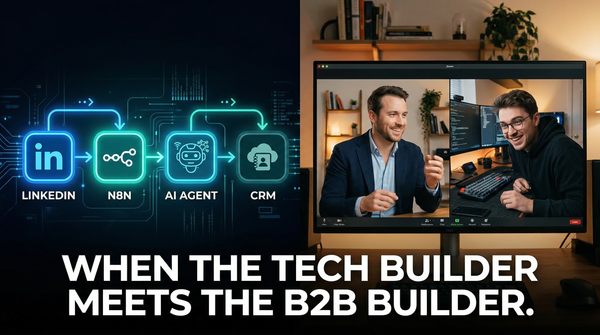
So now when a new connection comes in on LinkedIn, the person gets linked to a campaign, and Tim has the full context of what we’re offering and why it matters to them. He pulls up the prospect’s information, cross-references the campaign spec, drafts a personalized message, and brings it to me in a Slack thread for approval. We iterate if needed—“Nah, Tim, adjust the tone here”—and then he sends it. The message that booked this meeting wasn’t generic. It clicked because the whole system—AI research, campaign context, personalized drafting, human approval—worked together.
Tim and Scout: The Beginning of a Bot Team
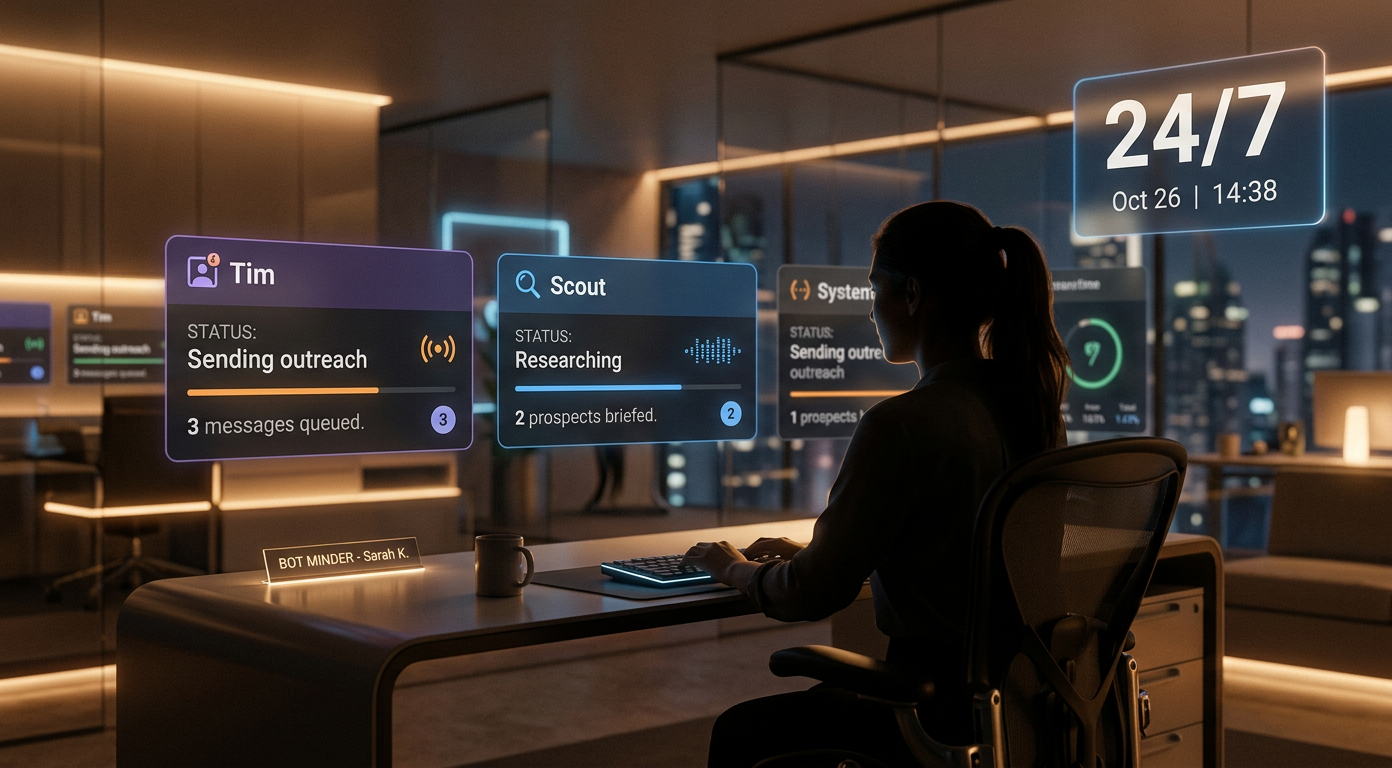
Here’s where this gets really interesting. Tim isn’t alone anymore. I’ve added a second agent—Scout—who handles research and intelligence gathering. The idea is simple: treat your agents like people on your team. Give them roles, personalities, and specific work they do. Tim is the operator—he executes, sends messages, manages the CRM. Scout is the researcher—he digs into prospects, surfaces insights, prepares briefs.
I’ve already seen Tim and Scout handing work off to each other inside Slack and scheduling tasks. It’s not fully baked yet—I haven’t optimized Scout’s Slack integration—but I built enough to see the multi-agent handoff working. And that’s the moment where you go from “I have a bot” to “I have a team.”
This isn’t science fiction, and it’s not just me. The entire industry is moving this direction. Slack itself is positioning as what it calls an “agent-powered work operating system”—a place where humans and AI agents collaborate side by side in channels with shared context.
A recent CrewAI survey found that 100% of surveyed enterprises plan to expand their use of agentic AI this year, with organizations reporting they’ve already automated an average of 31% of their workflows.
Fortune Business Insights projects the global agentic AI market will grow from $9 billion in 2026 to $139 billion by the early 2030s. The wave is here, and it’s not slowing down.
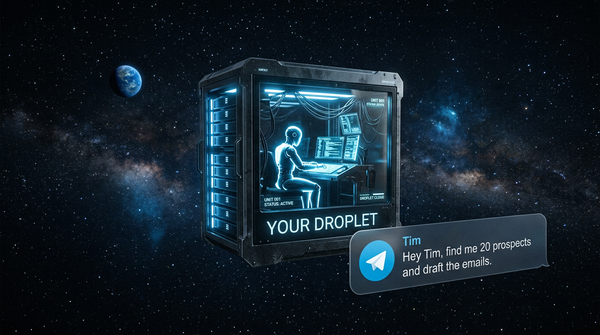
You could have 10 agents running twenty-four seven doing your bidding. And we’re not talking crazy infrastructure. It’s a DigitalOcean droplet. That’s it.
Deploy Your Own
Autonomous AI Agent Army
I'll guide you hands-on through building the exact infrastructure I use to run multiple agents — outreach, CRM, research — on a single server for under $50/month. You build it. You own it. No vendor lock-in.
AI Burnout Is Real—And So Is the Payoff
I want to be honest about something: I totally understand AI burnout now. I’ve been running on two, three, four hours of sleep a night for a week and a half. There were so many points where I thought I had it all figured out, and then it blew up again. Claude would go off on a tangent and rebuild something I didn’t ask for. My agents would lose their memories. I’d have to sit there at 2 AM having a conversation with an LLM about what’s in its own memory—“Hey, you’re hallucinating and thinking you can’t DM me, let’s clean that up”—and I’m like, what world am I even in right now?
But here’s the key thing I’ve learned about agents: don’t expect them to work perfectly out of the gate. That first message takes a lot of work. And then the next one, and you’re finding issues every time. It’s like, okay, it didn’t work exactly how I thought. That’s the reality of working with AI agents right now. They surprise you. They break in ways you didn’t predict. But each cycle teaches you and teaches them. By tomorrow, I’ll be doing 10 messages. By next week, 50. The compounding is what makes this so powerful.
The mindset that saved me was this: treat agents like new hires on your team. Give them roles and personalities. Expect a ramp-up period. Check on them. Course-correct. The people who understand this and have patience through the early pain are going to have a thousand-fold advantage over those who don’t.
Bot-Enabled People
Something clicked for me this week that goes beyond the tech. We’re not becoming AI-enabled people in the way everyone talks about it. We’re becoming bot-enabled people. The difference is that it’s not just “oh, I use an LLM to write better emails.” It’s: I have a little team of robotic agents, and I’m checking on them. I’m seeing how they’re doing. They’re talking to each other. They’re handing off work. And it works.
The infrastructure to run all of this?
A DigitalOcean droplet. Maybe $20 a month for a couple of bots running 24/7 with heartbeats, memory, everything. Could you build what I built without going to a higher tier?
Probably not—I’ve got an integrated CRM, multi-agent handoffs, campaign intelligence. But if you just want your first bot up and running? This whole thing is maybe $20 a month.
That’s it.
If you don’t have a robot, you need one. And if you’re a serious builder or business owner, you need to be understanding this and taking advantage of it right now. Because the people who get this—who build their frameworks and start running agents at scale—they’re going to be melting everybody else. We’re going to be moving workloads and processes into these environments, and people who were doing things manually are going to wonder what happened.
There is no going back. There is before robots and after. Everything up until now, and then everything in the future—because it’s going to be so different. It’s an absolute flood.
What’s Next: Twenty-Four Seven Botanamia
Today I’m sending 10 messages.
Getting through the bumps.
Training Tim and Scout to work together more smoothly in Slack.
Tomorrow it’ll be 50 messages.
Then I’ll have the advanced workflows fully running—agents talking to each other, scheduling work, handing off tasks—and it’s just going to run.
Twenty-four seven botanamia, as I call it.
I’m also thinking about this differently now. It’s not just about my own productivity.
I’ve been working on this problem for ten years—trying to figure out how to really automate outreach, really make it personal, really close the loop from first touch to booked meeting. And now that I see what’s possible, I want to help as many people as I can get here. Because when you understand what’s possible, when you burst your limits and see that you can have a team of autonomous agents running your campaigns while you sleep—there are going to be all types of good things that come from that.
The revolution is now. It isn’t coming. It’s running. And honestly? For $20 a month and some lost sleep, you might as well find out for yourself.
Deploy Your Own
Autonomous AI Agent Army
I'll guide you hands-on through building the exact infrastructure I use to run multiple agents — outreach, CRM, research — on a single server for under $50/month. You build it. You own it. No vendor lock-in.