The Human Gate: is AI SDR even viable?
AI SDRs are excellent at volume and hopeless at judgment. Here is what they actually cost per meeting, and the two stages you still own.
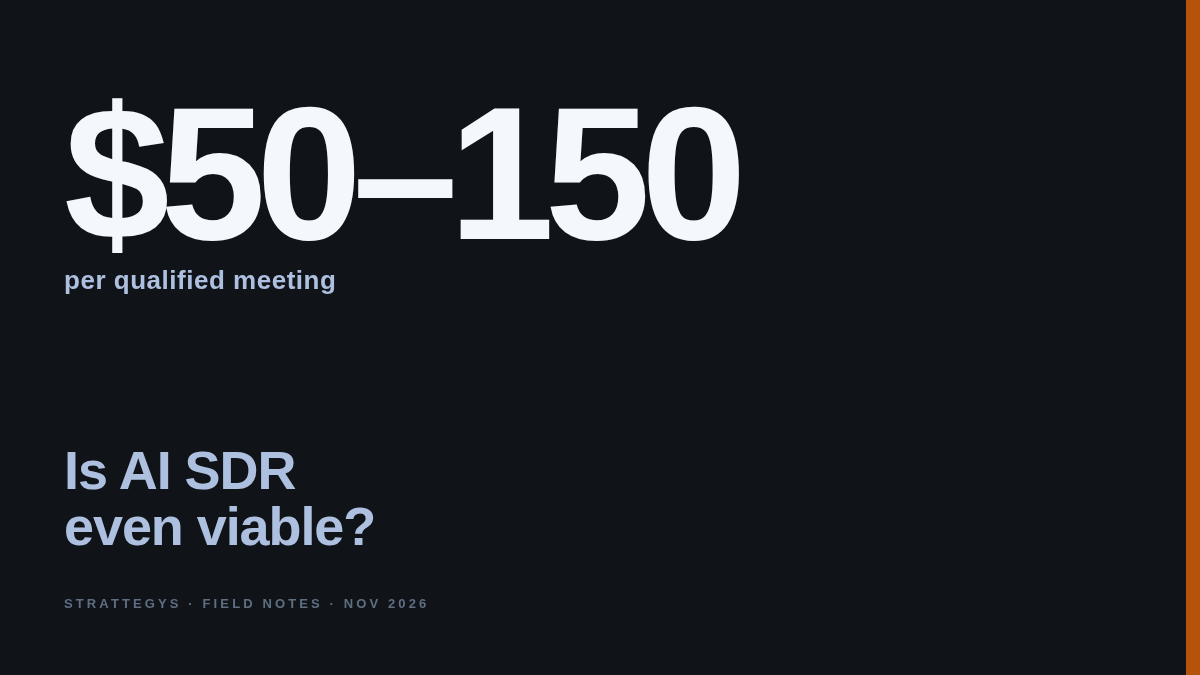
The billboards said stop hiring humans. That was 2024, San Francisco, money everywhere, and the claim was not subtle: the SDR job is over. Two years later I am on a livestream at nine in the morning opening pricing pages, and the honest question is no longer which tool to buy.
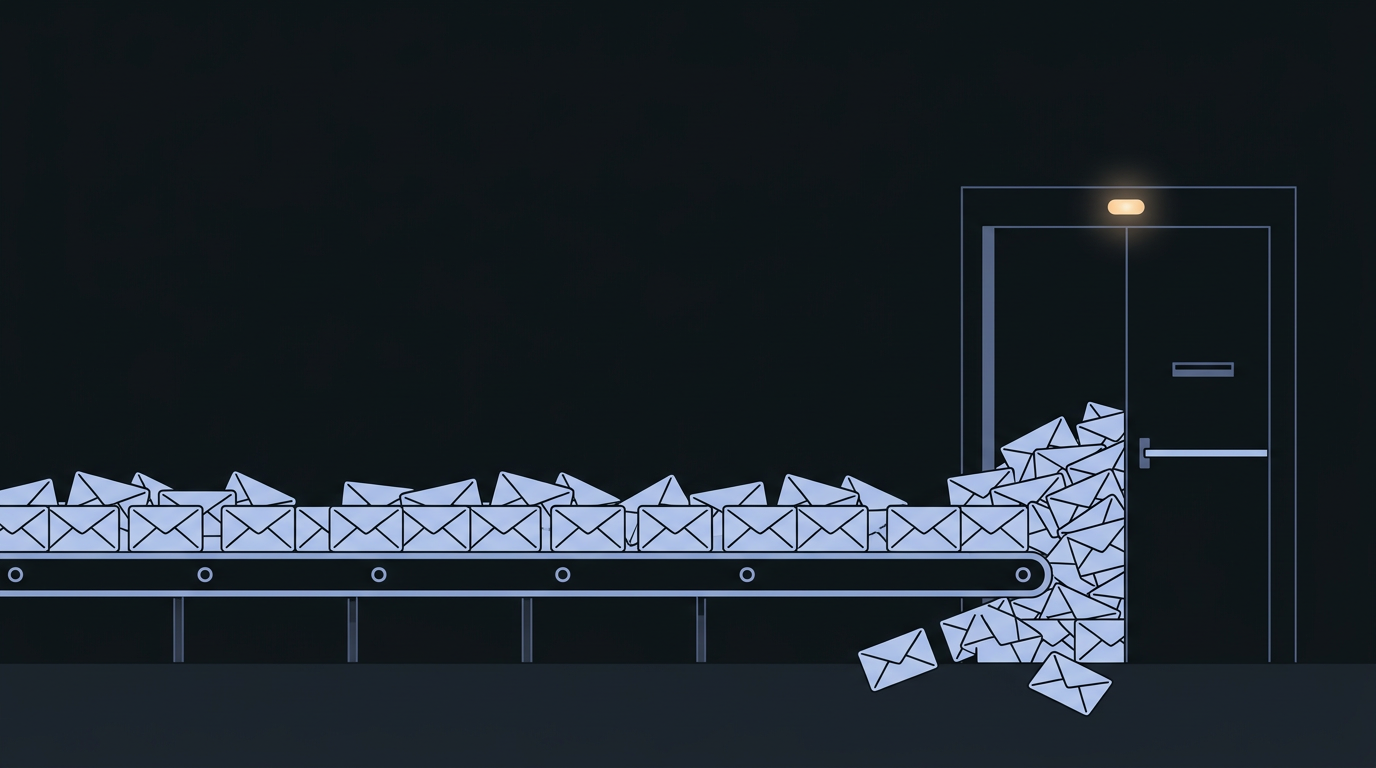
It is whether this category works at all.
I have a stake in the answer. I run a one-person company that sells to technical buyers, and I spent a year wiring agents into my own pipeline because I believed the pitch. So this is not a takedown from the sidelines. It is a report from inside the experiment, with the numbers the vendors publish and the ones they do not.
What was actually promised
The promise had three parts, and only two of them survived contact with customers.
- Cost. Replace a $70k rep with a subscription. Real: the software is cheaper than the person.
- Volume. Write and send at a scale no team could match. Also real.
- Judgment. Decide who is worth talking to, and be worth answering. This is the one that failed.
Every failure I can document lands on the third. Not model quality, not interface, not price. The machine can produce infinite matched messages and still not be a person worth replying to.
“A lot of people looking at AI SDR saying, oh, I need sales for my startup. Should I hire an SDR? Should I invest in AI SDR? … A lot of business owners look at channels and services as a solution to growth.”Govind Davis, Strattegys, 24 November 2026
That is a demand question wearing a software costume.
If nobody wants what you sell, no meter fixes it.
The evidence, in order
Start with the loudest claim, because it is the most falsifiable.
11x sold the market a number: one digital worker, eleven full-time jobs. Their own staff described churn of 70–80% to TechCrunch in March 2025. The company disputes it and cites 79% retention. I was not in the room, so I hold both. But a pilot that ends in a month is more informative than a testimonial that never ended.
ZoomInfo ran one. Their assessment, as reported: the agent performed significantly worse than our SDR employees. One pilot is not a verdict. It is also not nothing, from a company with a real list and a real comparison group.
Then the tell.
In August 2026, Artisan — the company that put “Stop Hiring Humans” on billboards — retired the campaign, hired a human BDR, and shipped a dialer for human reps at $67 a seat.
The flag-bearer of replacement started selling to the people it was replacing.
You do not do that when the model is winning. You do it when customers tell you what they actually need.
The job did not disappear. It got leaner and it got redistributed. And the companies most associated with AI-native selling roughly doubled their own SDR headcount while the rest of the market pulled back.
The thing that actually broke
It is worth being precise about the failure, because “AI is bad at sales” is not it.
AI is good at sales in the narrow sense. It reads a page and writes a plausible note. It personalises at a volume no human can touch. Given a list, it will work that list all week without complaining.
What it cannot do is be trusted by a stranger.
Trust is not a tone of voice. It is a bet the buyer makes about whether you will waste their afternoon. People make that bet in about two seconds, and they make it on evidence: do you know their business, have you done this before, is anyone on the other end going to answer. A model can imitate the first two. The third is a fact about your company.
So the category's real product was never writing. It was the promise that judgment could be rented. That is the promise that did not survive.
You can see it in the language. Two years ago the words were autonomous and replacement. Now the same vendors say co-pilot, human in the loop, approval gates. Nothing changed in the models. What changed is that customers kept asking who was accountable.
What the surge got right
I want to be fair to the argument, because it was not stupid.
The 2024 case went like this: outbound is a numbers game, most SDR work is repetitive, models are now good enough, therefore the work gets automated. Every step is defensible. The conclusion was still wrong, because it treated the job as a set of tasks rather than a relationship that happens to involve tasks.
- The tasks were automatable. The relationship was not.
- The volume was real. The demand was not created by the volume.
- The software got cheaper. The cost of an unanswered reply stayed exactly the same.
That is why the same failure shows up across five different products with five different pricing models. It is not a vendor problem. It is a category-level misread of what a salesperson is for.
And it is why the market is now settling into a shape nobody advertised: machines that answer, and humans who decide who is worth answering.
Why the mechanism fails
Forget the vendors and look at what outbound is.
It is six decisions in a chain: who exists, why now, what we sell, what we say, whether it lands, and who answers the yes. The industry automated five of them beautifully. The sixth is a person deciding to reply. The third is a person deciding what is true about their own business.
Those two are not software problems. They are attention and conviction — scarce in a way compute is not.
“You plug in your playbooks, your ICPs. You have an agent. It's gonna run campaigns. It's gonna send emails, send LinkedIn messages, LinkedIn DMs, LinkedIn connection requests, and queue up your responses. That's it. I mean, that's basically what you're gonna get.”Govind Davis, Strattegys, 24 November 2026
“That's it” is the honest spec sheet, and it is not an insult. It describes a machine that executes a strategy somebody else wrote.
When nobody writes it, the model infers one from your website. Your website, like everyone's, sounds like everyone's.
Competence at volume is how a domain dies.
The numbers that do not agree
Here the argument usually ends, because both sides quote different denominators.
The cleanest cold email baseline is Instantly's, January 2026: 3.43% average reply rate, 5.5% top quartile, 10.7% top decile — replies divided by emails sent, across real workspaces.
Then the vendors publish a better number next to a much worse one, in the same breath. AiSDR's pricing page carries 26.6% reply and, separately, 1 to 3 meetings per 100 contacts. One is a selected funnel stage. The other is what you budget on. At $1.50 a contact, a meeting costs $50 to $150 before a human has spent a minute on it.
Which is why the only case that survives is the unglamorous one, and the one I made on the stream:
“I've got five or 10 SDRs booking appointments, or running a current process, and I wanna cut 10 or 20% of that cost out by easing in an SDR automation. That starts to probably be more viable.”Govind Davis, Strattegys, 24 November 2026
Cutting cost inside a motion that already works. Not manufacturing a motion out of nothing.
None of that makes the category a fraud. It makes the headline numbers marketing, and the real numbers knowable only from your own pipeline.
Two numbers, one page. Budget on the second.
So is it viable?
Yes, in one shape, and the shape is unglamorous.
Every documented success I could find had demand already in motion and a named person on the reply. SaaStr's agents answer more than 600,000 annual site visits and produced $2.5M of pipeline in five months. Demandbase attributed 2x meetings from target accounts in two months and $80K of headcount avoided. Both inbound. Both staffed.
Nothing I found shows cold replacement working at the rate the marketing implies.
The viable version: a machine that answers, researches and drafts, with a human on the playbook and a human on the yes. Not a headcount replacement. A leverage multiplier on a motion that already exists.
That is a smaller claim than the billboards made and a better business to run, because it survives contact with a real list.
The gate is not a feature gap. It is the product.
What would change my mind
Three things, published by any vendor, and the argument is over:
- Meeting rate per contact over a full quarter, on a cold list, with qualified defined in advance.
- Domain reputation before and after, on the same list.
- What happened to the replies nobody answered inside an hour.
Until then, the only honest way to judge this category is to run it small, with the gate staffed, and count what a human being actually agreed to.
The evidence
| Claim | Number or quote | Source | Date |
|---|---|---|---|
| Average cold email reply rate | 3.43% (top quartile 5.5%, top decile 10.7%) | Instantly benchmark | Jan 2026 |
| Contact to booked meeting | 1–3 per 100 contacts | AiSDR pricing page and FAQ | Nov 2026 |
| Reply rate quoted beside it | 26.6%, denominator unstated | AiSDR pricing page | Nov 2026 |
| 11x churn allegation | 70–80%; 11x cites 79% retention | TechCrunch, with 11x's response | Mar 2025 |
| ZoomInfo pilot | “Performed significantly worse than our SDR employees” | Reported by TechCrunch | 2025 |
| Artisan's reversal | Retired “Stop Hiring Humans”, hired a human BDR, shipped a $67/seat dialer | KNK Outbound | Aug 2026 |
| SDR share of headcount | 6.7% Mar 2026 vs 6.8% end 2022 | Kenso Research (113,233 companies) | Oct 2026 |
| SDRs per AE | −7.7% while AE headcount grew 12% | Growth Unhinged / Sumble | May 2026 |
| Inbound agent result | $2.5M pipeline, 130+ meetings, 2.5x closed-won, five months | SaaStr, vendor-published | 2026 |
| Inbound agent result | 2x meetings, 100 hours/month saved, $80K headcount avoided | Demandbase, vendor-published | 2026 |
Recording quotes are verbatim, attributed without timestamps. Vendor results are labelled vendor-published. TechCrunch figures are allegations, with the company's response included.
The practical half: what each platform actually costs per meeting, what each meter optimises, and which one fits which team — The AI SDR Lineup.
Get the next field note
New articles, show notes, and practical lessons from the Strattegys AI crew.
 Insights
The AI Sales Reality Check: Robots, Reactions, and the Rising Cost of Inference
AI SDRs, 36-personality sales simulations, and the moment novelty turns into inference bills: a reality check with Govind, Magnus, and Mike H.
 Insights
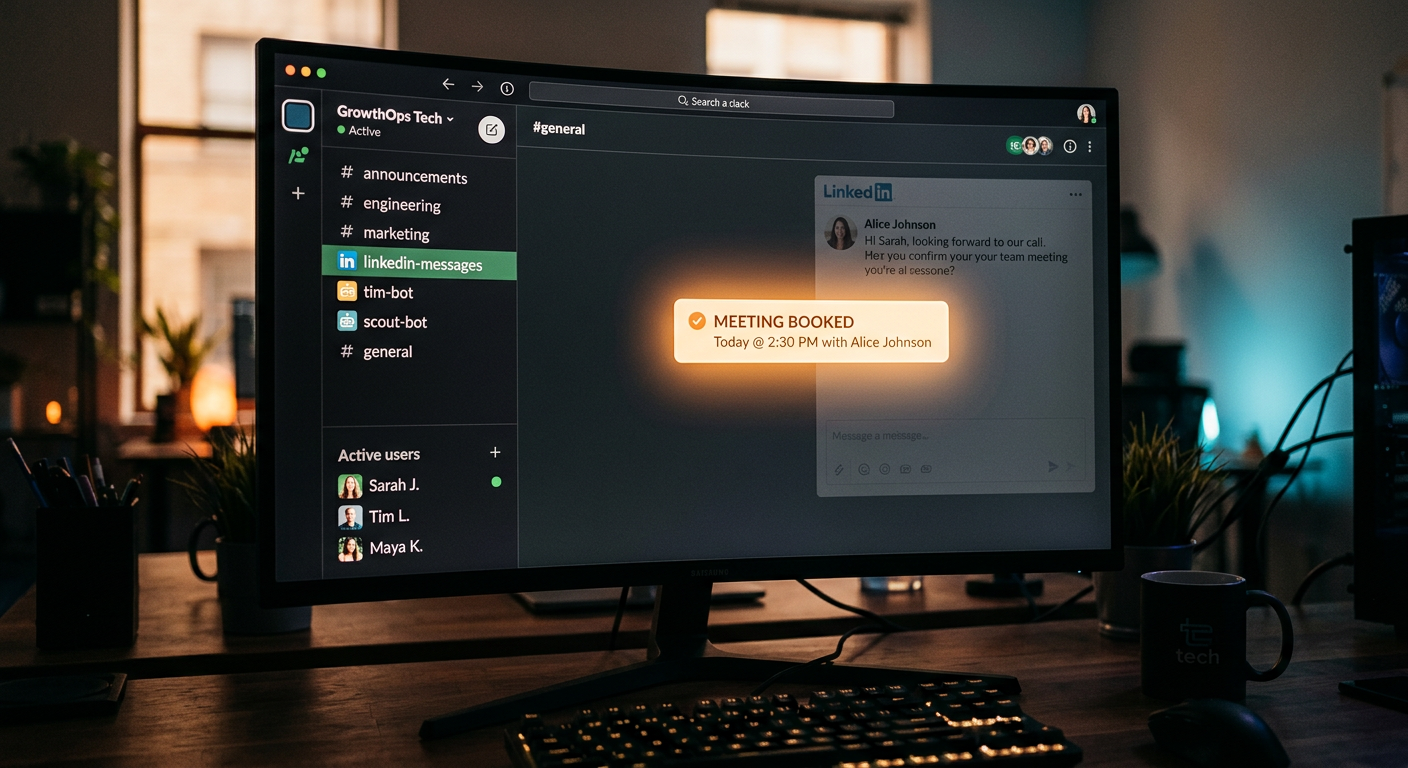
The First AI Managed Message from My Bot Tim, Just Booked a Call
The bot researched the prospect, drafted in Slack, I approved, Tim sent it — and the meeting got booked. The multi-agent future is already here.
 Featured
The Morning After the Hype
The hype phase is ending. Capacity, price and permission now decide what ships, and the work is still yours.

LandingRabbit
A website that matches what you sell — built from your ideas, slide decks, and sales notes.
Visit site →Your brand here
Get represented on the rack.
Get represented on the rack
Inquire about representation — coverage, qualified meetings, and deal support. No plans, no pricing sheets, just a conversation about fit.